
Commercial Natural Stone Cleaning & Restoration
Natural stone outlives everything around it. Its polish doesn’t. Stone is almost never a lost cause, so before you settle for how it looks now, let us hone out the damage and bring back the shine.
40+ YEARS · IICRC TRAINED · STONE IDENTIFICATION BEFORE ANY SERVICE
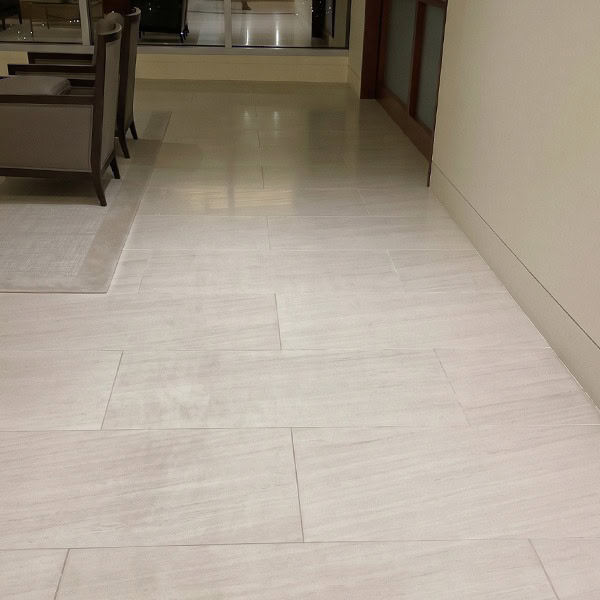
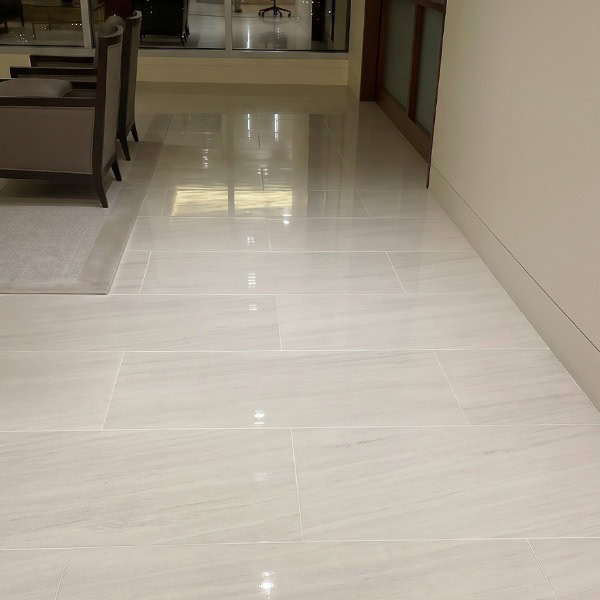
Dull stone and darkened joints, both brought back.
If it doesn’t clean off, it isn’t dirt.
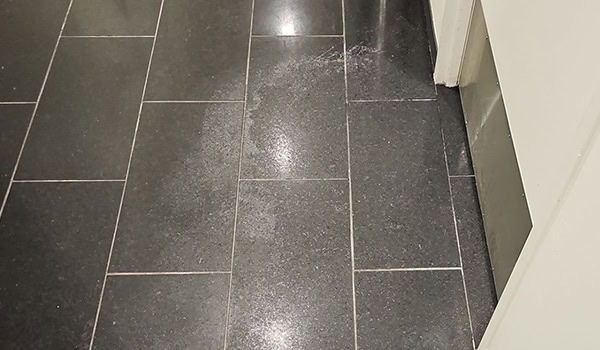
A dull ring where someone set a coffee cup down is a chemical burn: something acidic dissolved a thin layer of the stone, leaving that spot rough so it scatters light instead of reflecting it. A walking lane that has gone dull is thousands of footsteps grinding tracked-in grit across stone that is softer than the grit is. A limestone floor that has darkened along the path has absorbed soil below the surface. Three different problems, and cleaning changes none of them, because the shine on polished stone isn’t a coating sitting on top of it. It’s the stone itself, ground smooth.
NO AMOUNT OF CLEANING WILL ERASE DAMAGE.
Etching, scratches, and dulled traffic lanes are changes to the surface of the stone, not something sitting on it. Honing removes them by taking the surface back and polishing it again.
Where to look in your building
- Around the tables and counters where cups and glasses sit
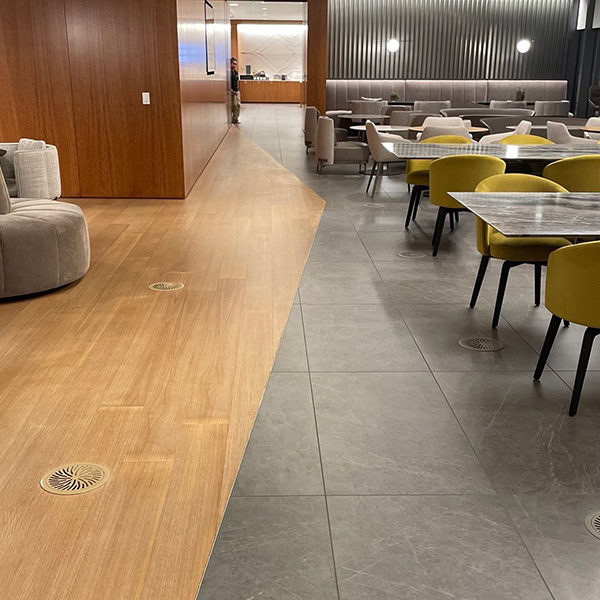
- Down the main walking lane, dull while the border still shines
- Just inside the entries, where grit gets tracked in and ground across
- Elevator floors, where carts and heels concentrate in a few square feet
- Under fixtures and tight against the walls, where nobody walks. That’s what the rest of the floor used to look like.
Soil comes out with the right chemistry. Everything else comes out by taking the surface back and polishing it again. We’ll tell you which one you’re looking at before we quote anything.
When is it time for restoration?
Daily cleaning maintains the surface. Deep cleaning restores it.
Your Daily Janitorial Team
Does a great job within a defined scope. That scope is built to keep the whole building clean every night, which is different work from restoring one floor, with different equipment. In a single hour, the crew may need to:
- Cover 5,000 to 8,000 square feet
- Empty trash and damp-mop floors
- Spot clean and dust
- Vacuum primary hallways and offices
- Mop and restock restrooms
There isn’t room in that hour for restorative work. Add it to their scope, and it queues behind the daily tasks, often late, sometimes not at all.
Our Deep Cleaning Model
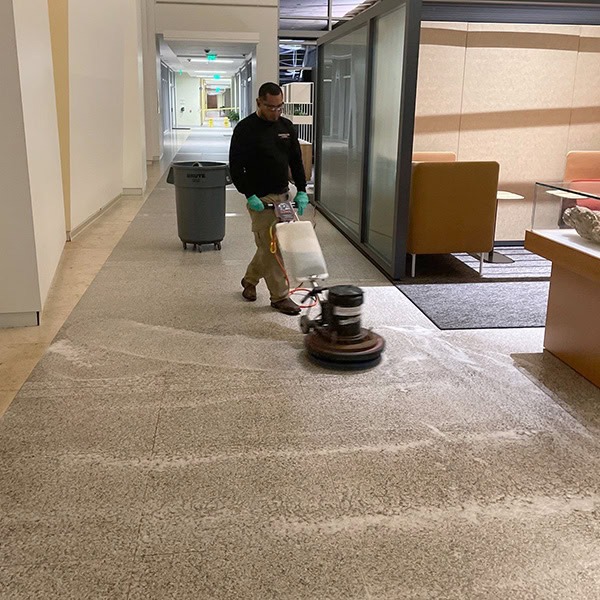
Comes in periodically with one job to do. Surface-specific expertise, chemistry, and IICRC-certified protocols that daily cleaning crews don’t have. On a single visit, we may:
- Identify the stone and match the method to it
- Deep clean with pH-neutral, stone-safe chemistry
- Diamond hone and polish out etching, scratches, and traffic wear
- Repair chips, cracks, uneven tiles, and pitting
- Seal with an impregnating sealer that resists stains and lets the stone breathe
We’re not replacing your crew. We’re handing them a floor that’s smooth, sealed, and finally responsive to cleaning.
Different expertise for different outcomes.
We’re Better Together.
What restores one stone can damage another.
Marble etches where granite won’t. Travertine pits where slate flakes. These five cover most commercial floors, and identifying which one you have is the first thing we do, before anything touches it.

Soft, veined & mirror-polished.
The prestige stone and the most sensitive. It scratches and etches easily, and only re-polishing takes the dull marks out.
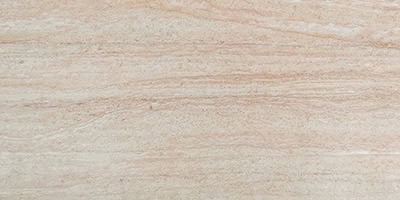
Matte and uniform, tan to cream.
Very porous, so it soaks up oil and spills quickly, and it etches like marble. Sealing matters more than on any other stone.
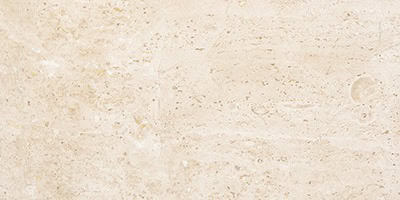
Warm, pitted, filled at the factory.
The fill pops out over time and new holes open and collect grit. It needs refilling, and it etches like marble.
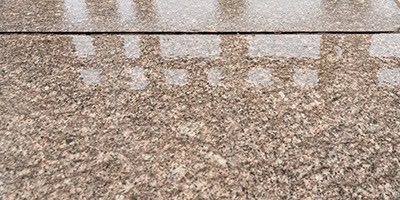
Speckled, hard, the workhorse.
The most stain and acid resistant of the group. It still dulls in the walking lanes and loses its seal.
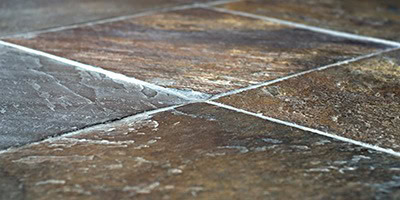
Dark, layered, naturally textured.
Chosen for grip, so the texture stays. It can flake, and the color fades without an enhancing sealer.
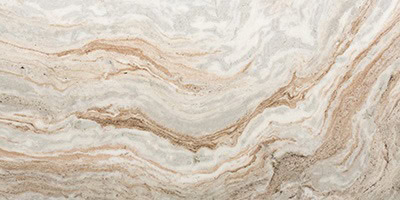
There are more than five.
Quartzite, soapstone, onyx, bluestone, sandstone, and serpentine (often sold as green marble) all turn up in commercial buildings, and each has its own rules.
Some floors look like stone and aren’t. Terrazzo and engineered stone are chips or dust set in a binder, so they’re treated differently. We work on both, and terrazzo has its own page.
Same floor. Deep cleaned & polished.
Nobody tears out a stone floor. A dull floor either stays that way or it gets brought back, and bringing it back costs a fraction of what covering it with something else would. Daily cleaning keeps it clean. It can’t remove etching or put the polish back.
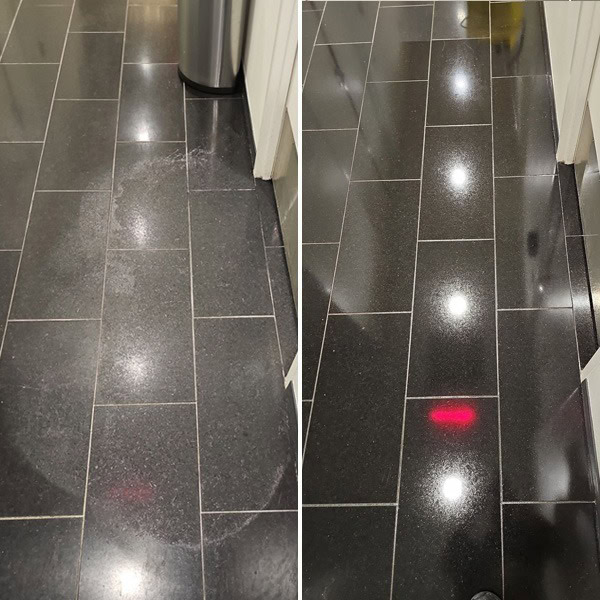
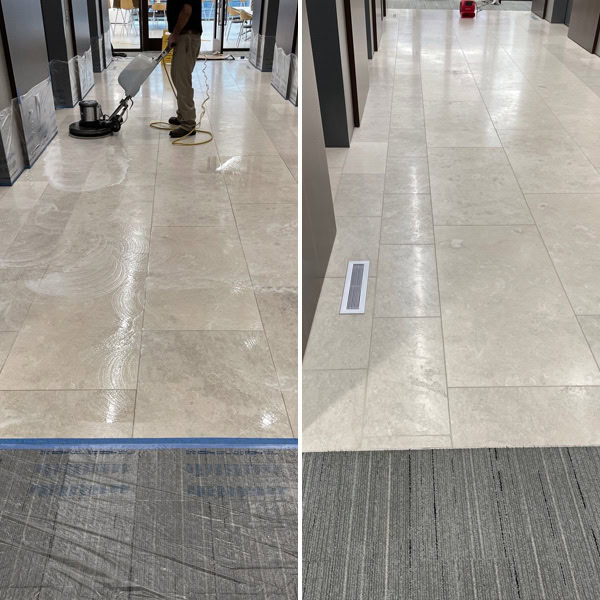
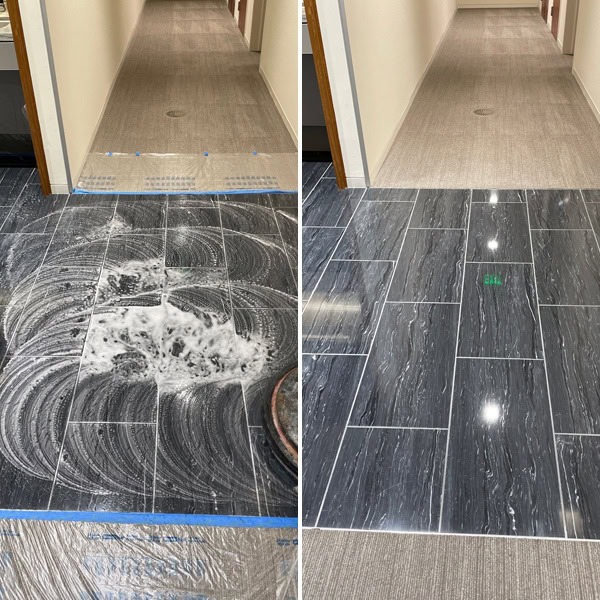
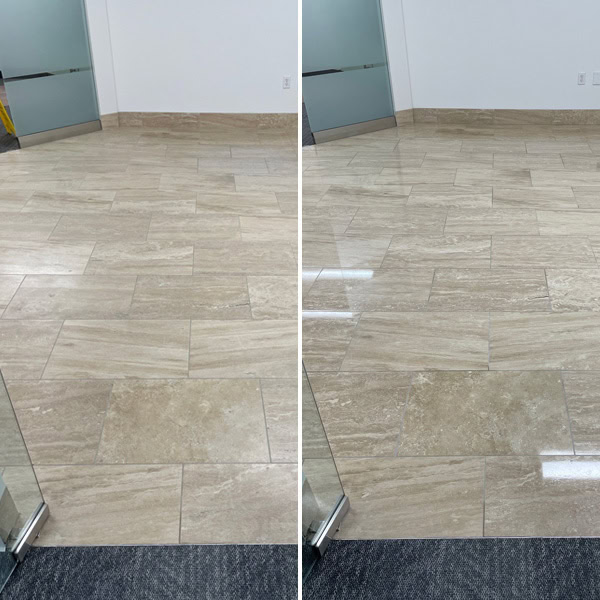
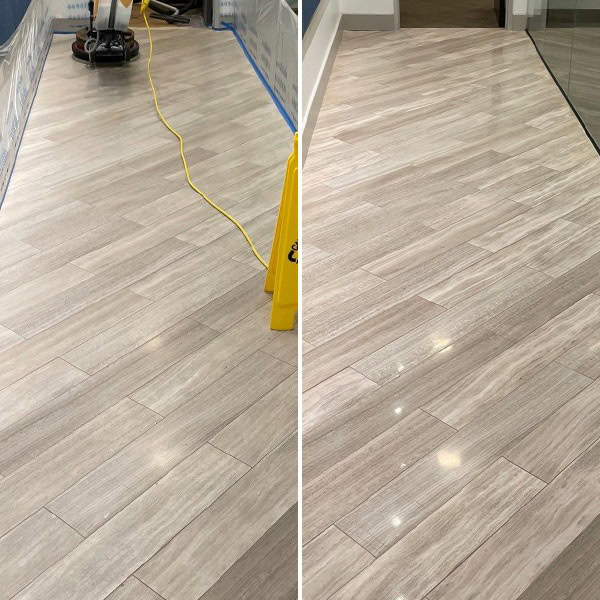

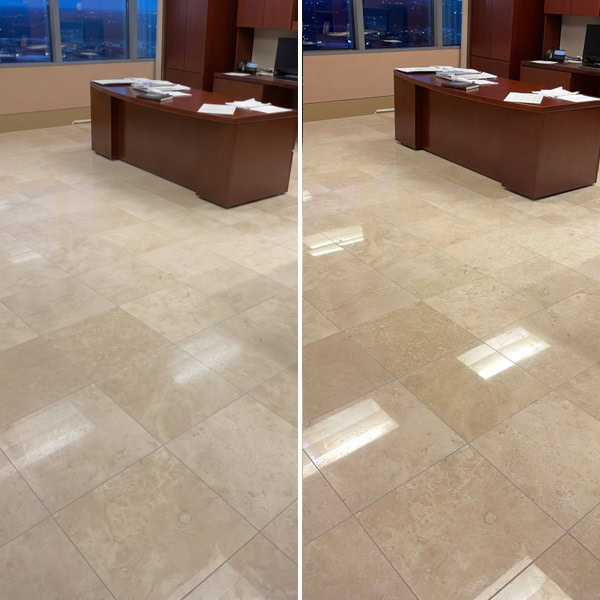
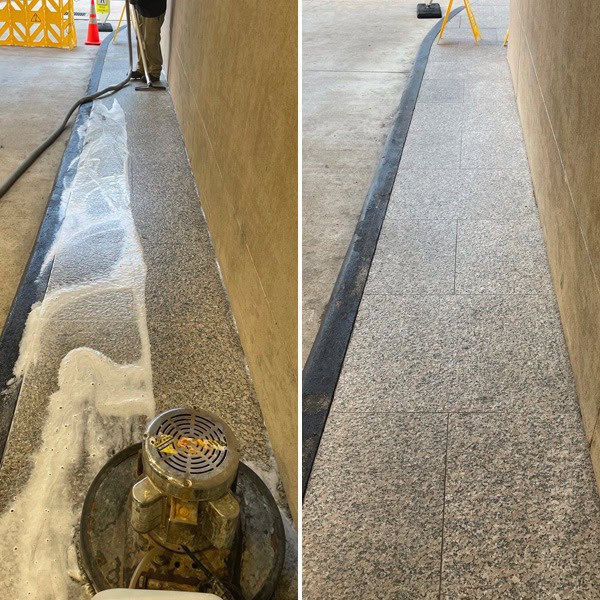
Before on the left, after on the right.
Identify it. Restore it. Seal it.
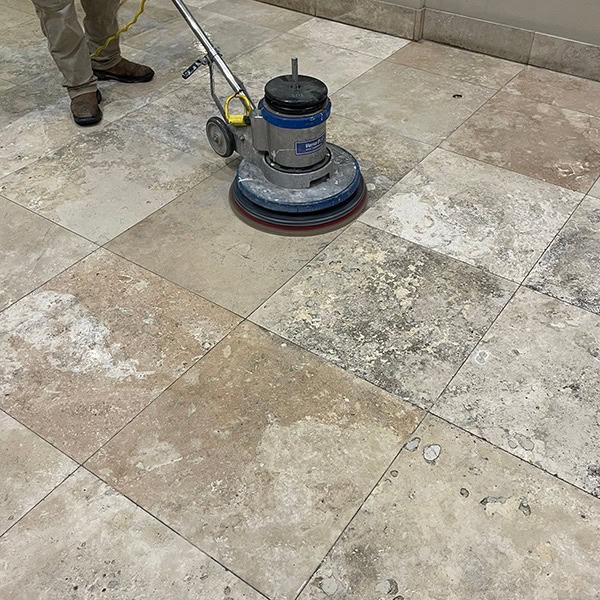
We start by identifying the stone because that determines everything that follows. Then a deep clean with pH-neutral, stone-safe chemistry to lift the soil without touching the finish. Diamond honing grinds out the etching, scratches, and worn lanes. Then we take the sheen back up to whatever the floor calls for, from a honed matte to satin to high gloss. Chips, cracks, uneven tiles, and pitting get repaired along the way. Last comes an impregnating sealer that soaks in to resist stains while letting the stone breathe. No demolition and no debris. We work nights, weekends, or in phases so the space stays open.
See it before you commit.
Pick one entry, one elevator floor, one section of the lobby. We restore it; you judge it. Defined scope, transparent price, no obligation beyond that one job.
RESTORE IT + PROTECT IT
Back to beautiful.
Clean, hone, polish, repair, and seal every stone floor in scope. One project, one invoice, no program required.
MAINTAIN IT
Take it off your plate.
We come back on a cadence set by your traffic, keep the finish where it should be and reseal before the protection thins. Floors on a program carry our appearance warranty.
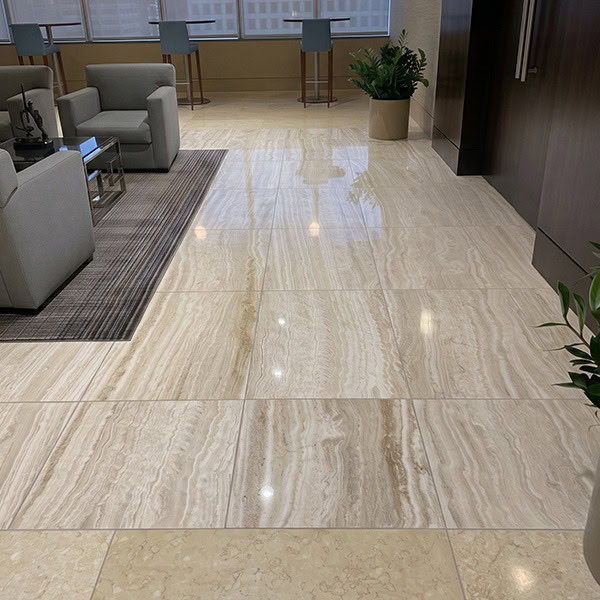
Not ready for the whole floor?
Pick one entry or one elevator lobby. We’ll restore it. You judge it, and you decide from there.
What we’ll tell you honestly.
Etching, scratches, and worn lanes come out because honing takes the surface back past them. Stains are different: something that soaked deep into a porous stone may lighten rather than disappear. Repairs to chips, cracks, and uneven tiles are blended, and they hold, but they are repairs. And slate keeps its texture. It was chosen for grip, so on a slate entry we bring the color back and seal it rather than polishing it flat.
After 40 years and millions of square feet, we know what a floor can come back to before we start. We’ll tell you which stone you have, what it needs and what it doesn’t, and if a section is past restoring you’ll hear that before the work begins, not after. And if we spot a problem developing outside our scope, you’ll hear about that too, whether or not there’s work in it for us.
One thing worth knowing about honing. It removes a thin layer of the stone, which is how the etching and scratches come out. Caught early, that layer is almost nothing. Left to deepen, it takes more of the floor and more of the budget, so the sooner we see it, the less we have to remove.
And one thing that costs you nothing. The grit tracked in on shoes is harder than marble, limestone, and travertine, and it does most of the dulling in your walking lanes, one step at a time. The more of it that gets caught at the door, the slower everything else happens. Matting is the cheapest protection for a stone floor, and we don’t sell it.
Forty years in business. Our technicians average twelve.
Serving buildings across the United States and Canada since 1984.
Family-owned, woman-owned, and organically grown.
40+
Years in Business
Since 1984. Family owned, organically grown. No venture capital, no private equity.
IICRC
Instructor On Staff
We don't send our people to someone else's class. We run the class.
85%
Safer Than Industry Average
A recordable incident rate 85 percent or more below the industry average.
12+
Year Avg. Tenure
The same technicians come back to your building. Day one quality on day 1,000.
WBENC
Woman-Owned
Certified Women's Business Enterprise. Counts toward Fortune 1000 diversity spend.
US + CAN
National Coverage
One point of contact for every surface in every building in your portfolio.
Let’s look at your stone.
Book a complimentary assessment. We’ll identify the stone, find out whether what you’re seeing is soil or etching, check the seal and the condition of the joints and repairs, and tell you what the floor can be restored to. Then we’ll come back with a recommendation and a price. One entry or a whole building.
Or call the 24/7 facility support hotline: (800) 728-8508