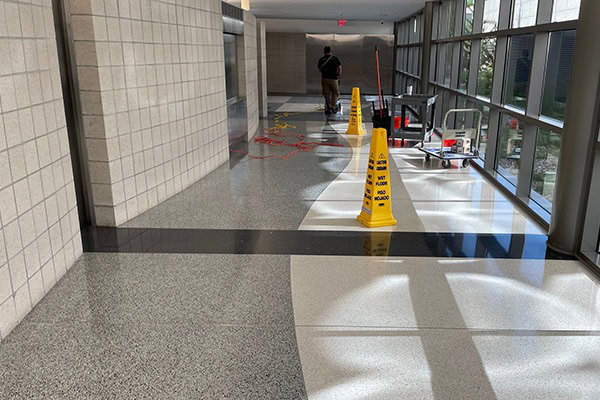
Commercial Terrazzo Cleaning, Restoration & Polishing
Terrazzo outlasts almost every floor in the building. Its shine doesn’t. Before you write yours off, let us strip what’s on top and show you the floor underneath.
CEMENTITIOUS AND EPOXY TERRAZZO, IN LOBBIES, CORRIDORS, SCHOOLS, AIRPORTS, AND CIVIC BUILDINGS.
40+ YEARS · IICRC TRAINED · CEMENTITIOUS AND EPOXY
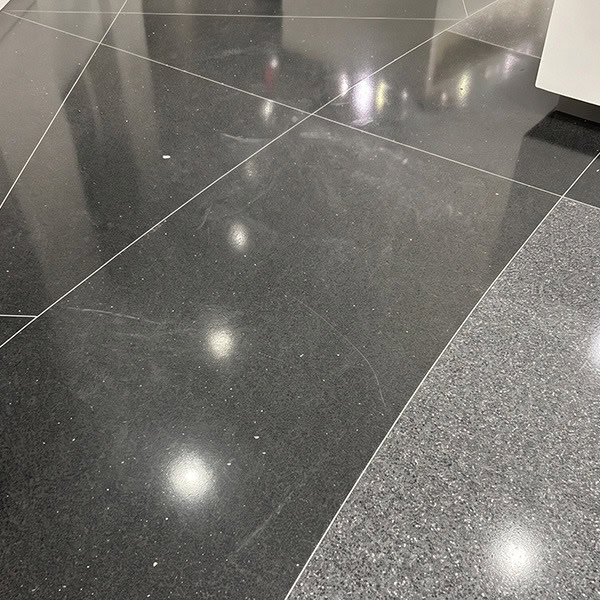
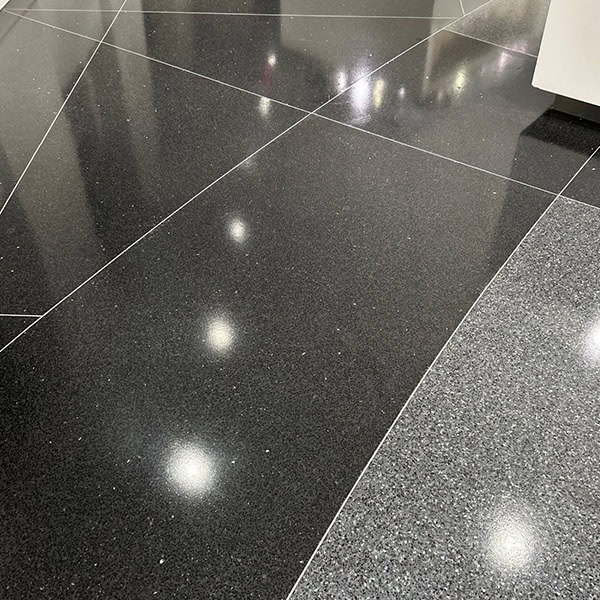
Same floor. Stripped, honed, and protected.
The floor you’re looking at might not be your terrazzo.
Terrazzo is often maintained the same way as vinyl, with acrylic wax. Each strip-and-wax cycle leaves another layer behind, and over the years, those layers stack up until the surface everyone sees is the finish rather than the stone. The terrazzo underneath is usually fine. It’s just been covered up.
THE REAL FLOOR IS UNDER THERE.
Most dull terrazzo isn’t worn out. It’s buried. Strip the stack, hone the surface and the color comes back, because the material was never the problem.
What that looks like in your building
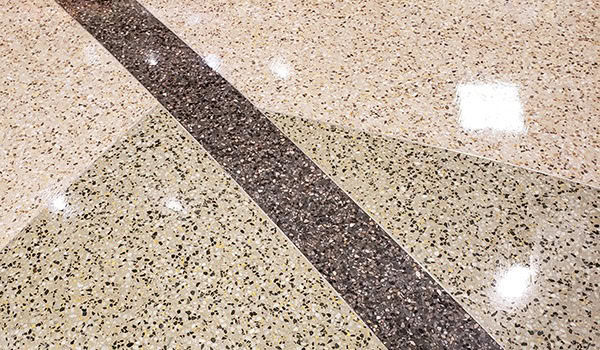
- Yellow or amber color, thickest at the edges, corners, and under fixtures
- Chips that look flat and washed out instead of crisp
- A shine that fades faster after every recoat
- Dull, hazy patches where traffic has worn through the buildup
- Etching and stains where acidic spills reached unsealed cementitious terrazzo
Look at the corners, the edges, and under the fixtures, anywhere a burnisher doesn’t reach. The amber buildup is thickest there, and that color is the wax, not the floor.
When is it time for restoration?
Daily cleaning maintains the surface. Deep cleaning restores it.
Your Daily Janitorial Team
Does a great job within a defined scope. That scope is built to keep the whole building clean every night, which is different work from restoring one floor, with different equipment. In a single hour, the crew may need to:
- Cover 5,000 to 8,000 square feet
- Empty trash and damp-mop floors
- Spot clean and dust
- Vacuum primary hallways and offices
- Mop and restock restrooms
There isn’t room in that hour for restorative work. Add it to their scope, and it queues behind the daily tasks, often late, sometimes not at all.
Our Deep Cleaning Model
Comes in periodically with one job to do. Surface-specific expertise, chemistry, and IICRC-certified protocols that daily cleaning crews don't have. On a single visit, we may:
- Strip the wax and coatings that are hiding the floor
- Deep clean with pH-neutral, terrazzo-safe chemistry
- Diamond hone and polish cementitious terrazzo back to a reflective finish
- Color-match repairs for cracks and missing chips
- Protect with a CareGuard coating, in satin or high gloss
We’re not replacing your crew. We’re handing them a floor that keeps its shine without a strip-and-wax cycle.
Different expertise for different outcomes.
We’re Better Together.
Two kinds of terrazzo. Two different jobs.
Terrazzo is chips of marble, granite, glass, or quartz held together by a binder, and the binder decides everything about how the floor should be treated. Get that wrong and the damage doesn’t clean off.
Cement binder. The classic floor.
Common in older and historic buildings. It’s porous, so it stains when it isn’t sealed, and the marble chips etch if acidic cleaners touch them. It’s diamond-honed, polished, and sealed, and honing removes wear and etching from the surface.
Resin binder. The modern floor.
Poured in newer construction, in brighter colors. It’s non-porous and more stain-resistant by nature, so it’s deep cleaned and protected rather than aggressively honed.
Not sure which you have? Brass and thin metal strips show up in both, so the better tell is the layout: cementitious floors need a tight grid of strips to control cracking; epoxy allows wide, seamless spans and vivid color. We verify your floor’s exact composition on site, at no charge, before any restoration begins.
Same floor. Deep cleaned & restored.
Terrazzo doesn’t get torn out. A dull floor either stays that way or gets brought back for a fraction of the cost of new flooring. Daily cleaning keeps it clean, but it can’t remove scratches or restore the shine. That takes the right equipment, the right chemistry, and knowing which terrazzo you’re standing on.
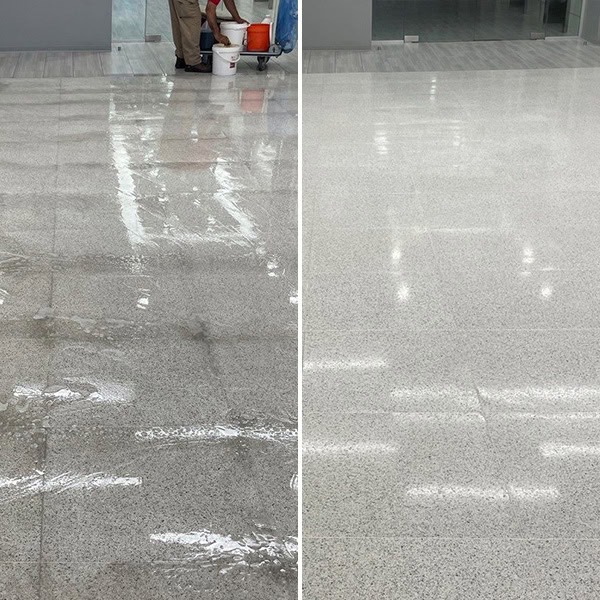
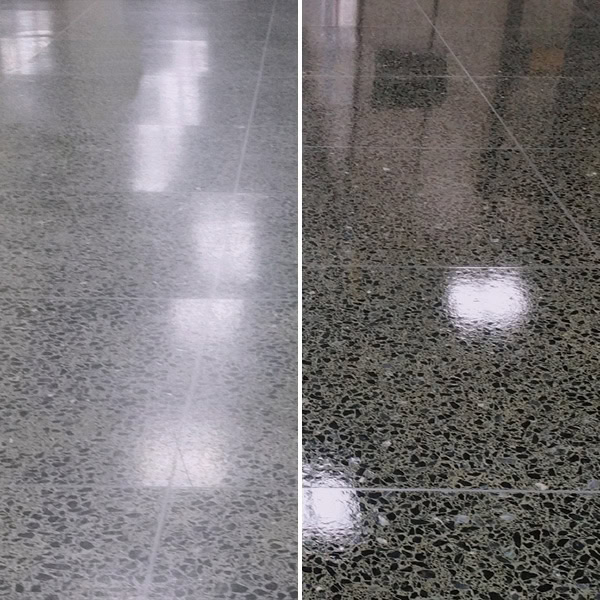
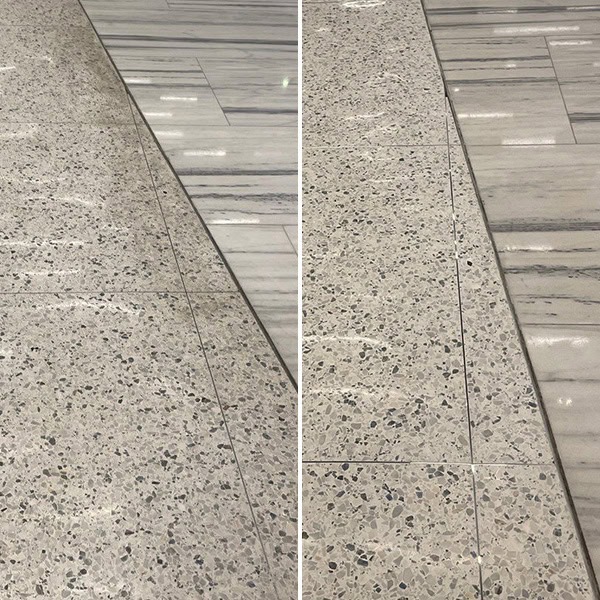
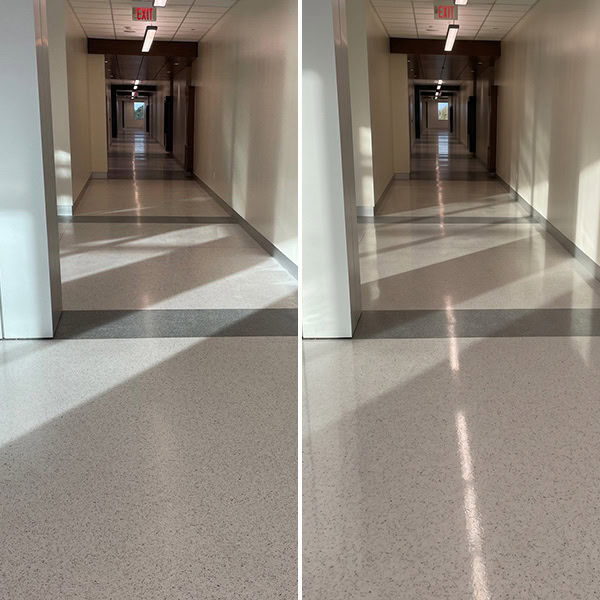
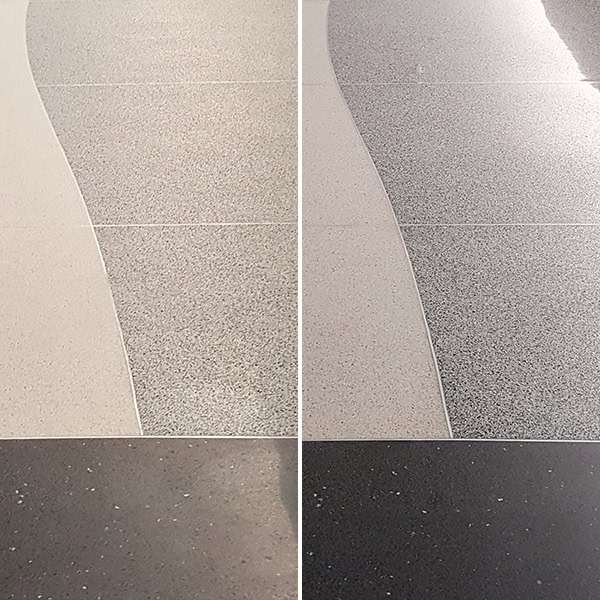
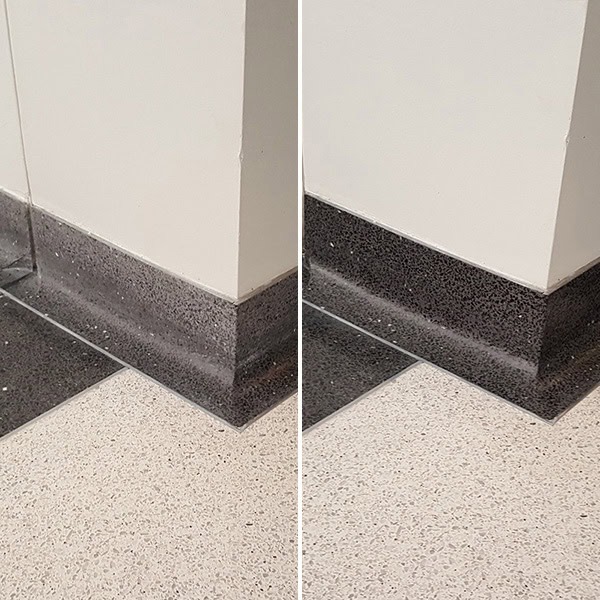
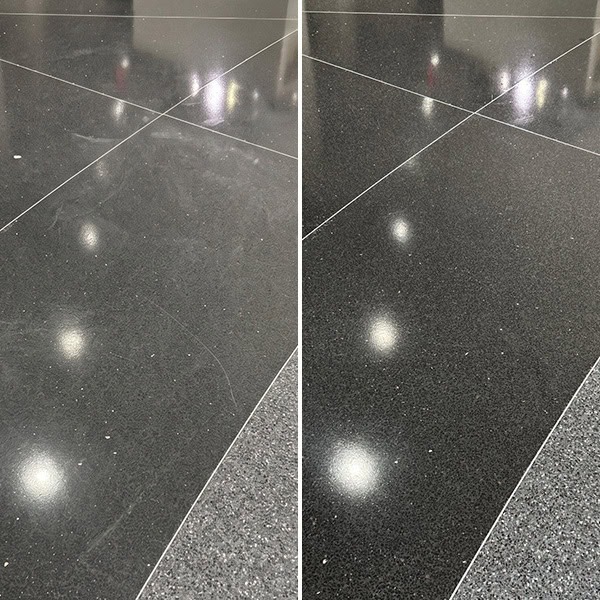
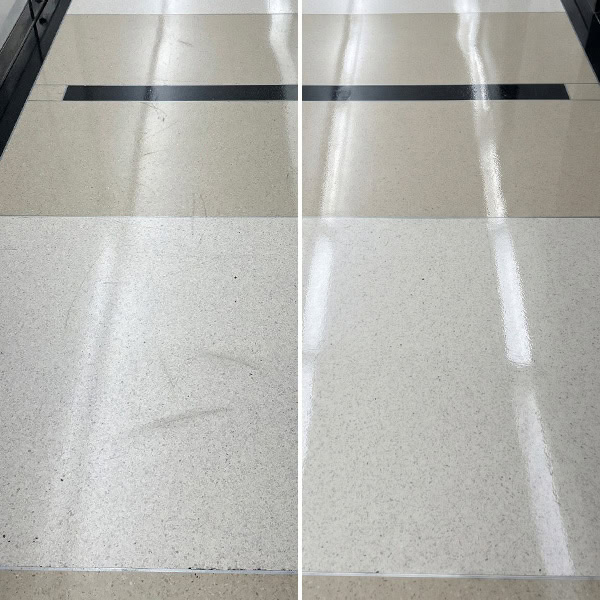
Before on the left, after on the right.
Strip it. Hone it. Protect it.
First, the wax and old coatings come off, because nothing can be judged until they do. Then a deep clean with pH-neutral, terrazzo-safe chemistry. On cementitious floors, diamond honing and polishing remove wear and etching and restore the reflection, in satin or high gloss. Cracks and missing chips get color-matched repairs, blended so they disappear once the floor is polished. Then a CareGuard coating preserves the shine and resists stains, with an anti-slip additive where needed.
No demolition and no debris. Honing is wet and dust-controlled, and we work nights, weekends or in phases so the space stays open.
See it before you commit.
Pick one corridor, one entry, one section of lobby. We restore it, you judge it. Defined scope, transparent price, no obligation beyond that one job.
RESTORE IT + PROTECT IT
Back to beautiful.
Strip, deep clean, hone and polish where the floor calls for it, repair what needs repair, then seal and protect it. One project, one invoice, no program required.
MAINTAIN IT
Take it off your plate.
We come back on a cadence set by your traffic, renew the coating before the wear shows, and the strip-and-wax cycle never starts again. Floors on a program carry our appearance warranty.
What we’ll tell you honestly.
Stripping the wax shows you the floor as it actually is, and sometimes that includes staining that the buildup was hiding. On cementitious terrazzo, honing takes out most etching and wear. On epoxy, deep scratches and chemical damage may not come out completely because that floor isn’t honed the same way. Repairs to cracks and missing chips are color-matched and blended, and from standing height they disappear, but they are repairs, and we won’t tell you otherwise.
After 40 years and millions of square feet, we know what a floor can come back to before we start. We’ll tell you which kind of terrazzo you have, what it needs and what it doesn’t, and if a section is beyond restoration, you’ll hear that before the work begins, not after. And if we spot a problem developing outside our scope, you’ll hear about that too, whether or not there’s work in it for us.
Honing removes a thin layer of the floor, which is how the wear and the etching come out. That means a terrazzo floor has a finite number of restorations, so we remove only what the job needs and no more. Catching a floor early preserves more of it for the next time.
Forty years in business. Our technicians average twelve.
Serving buildings across the United States and Canada since 1984.
Family-owned, woman-owned, serving buildings across the United States and Canada.
40+
Years in Business
Since 1984. Family-owned, organically grown. No venture capital, no private equity.
IICRC
Instructor On Staff
We don't send our people to someone else's class. We run the class.
85%
Safer Than Industry Average
A recordable incident rate 85 percent or more below the industry average.
12+
Year Avg. Tenure
The same technicians come back to your building. Day one quality on day 1,000.
WBENC
Woman-Owned
Certified Women's Business Enterprise. Counts toward Fortune 1000 diversity spend.
US + CAN
National Coverage
One point of contact for every surface in every building in your portfolio.
Let’s look at your terrazzo.
Book a complimentary assessment. We’ll identify which kind of terrazzo you have, see what’s built up on top of it, check the chips and the divider strips, and tell you what the floor can be restored to. Then we’ll come back with a recommendation and a price. One corridor or a whole building.
Or call the 24/7 facility support hotline: (800) 728-8508